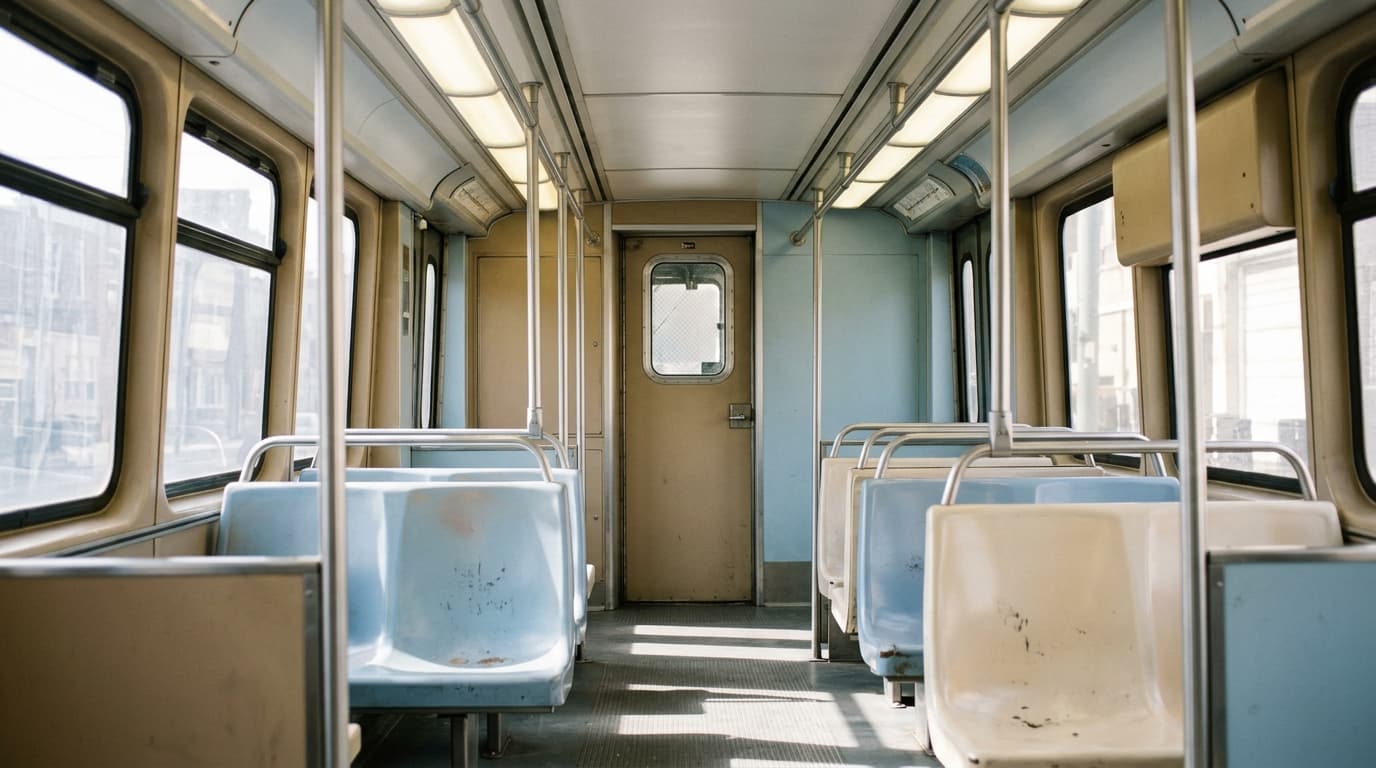
SEPTA Bus and Trolley Accident Claims Follow Different Rules Than Car Accident Cases in Philadelphia
If you were injured on or by a SEPTA bus or trolley in Philadelphia, your legal claim is governed by Pennsylvania's sovereign immunity laws and SEPTA's status as a government entity - not the standard negligence rules that apply to car accident cases. This distinction directly affects your deadline to file, the damages you can recover, and how your attorney must build your case.
Understanding these differences is critical before you speak to an insurance adjuster or sign any paperwork. Working with an experienced car accident lawyer in Philadelphia who handles transit authority claims gives you a decisive advantage from day one.
SEPTA Is a Government Entity - and That Changes Everything
The Southeastern Pennsylvania Transportation Authority is a Commonwealth agency. Under Pennsylvania's Sovereign Immunity Act (42 Pa.C.S. § 8521), government entities are generally shielded from lawsuits - but there are specific exceptions that allow injury claims against SEPTA when negligence involves the operation of a motor vehicle or dangerous conditions on its vehicles or property.
Because SEPTA is not a private company, you cannot simply file a standard civil lawsuit the same way you would against a rideshare driver or a private trucking company. The procedural requirements are stricter, the notice deadlines are shorter, and the caps on damages are set by statute.
The Notice Requirement: Your First Critical Deadline
In a standard Philadelphia car accident claim against a private driver, Pennsylvania's statute of limitations gives you two years from the date of injury to file a lawsuit. SEPTA claims impose an additional layer: formal written notice to SEPTA within six months of the incident as a prerequisite to filing suit.
Missing that six-month notice window can permanently bar your claim - regardless of how serious your injuries are. This notice must identify the date, location, and nature of the accident and your injuries. An attorney handling SEPTA claims knows exactly what this notice must contain and how to serve it properly.
Damage Caps That Don't Apply in Private Car Accident Cases
Pennsylvania law caps damages recoverable against Commonwealth agencies, including SEPTA, at $250,000 per plaintiff and $1,000,000 per occurrence (42 Pa.C.S. § 8528). Punitive damages are entirely prohibited against government entities.
By contrast, in a standard car, truck, or motorcycle accident case against a private party in Pennsylvania or New Jersey, there is no statutory cap on compensatory damages, and punitive damages are available when conduct is reckless or intentional. A truck accident attorney in NJ handling a claim against a private carrier faces no equivalent ceiling on recovery.
SEPTA Bus and Trolley Claims vs. Standard Car Accident Claims: Key Differences
| Factor | SEPTA Bus/Trolley Claim | Standard Car Accident Claim (PA/NJ) |
|---|---|---|
| Defendant type | Commonwealth agency (government) | Private individual or company |
| Pre-suit notice required | Yes - written notice within 6 months | No formal pre-suit notice required |
| Statute of limitations | 2 years, but notice must precede filing | 2 years (PA) / 2 years (NJ) |
| Damage cap | $250,000 per plaintiff (statutory) | No cap on compensatory damages |
| Punitive damages | Prohibited | Available for reckless/intentional conduct |
| Immunity defenses | Sovereign immunity applies (limited exceptions) | No immunity defense available |
| Insurance structure | Self-insured through Commonwealth | Private auto insurance or commercial carrier |
Common SEPTA Accident Scenarios That Qualify for Claims
Pennsylvania law carves out specific exceptions to sovereign immunity that allow SEPTA injury claims to proceed. Qualifying incidents include:
- Bus or trolley collisions with other vehicles, cyclists, or pedestrians caused by operator negligence
- Passenger falls due to sudden stops, jerky acceleration, or unsafe vehicle conditions
- Door malfunction injuries where passengers are caught in closing doors
- Slip-and-fall accidents on SEPTA vehicles or at transit stations due to dangerous conditions
- Pedestrian strikes at intersections where a SEPTA operator failed to yield
If you were a pedestrian struck by a SEPTA bus, your situation involves a complex overlap between transit agency liability and pedestrian accident law in Philadelphia. These cases require immediate evidence preservation - bus cameras, dispatch logs, and operator records - before SEPTA's legal team controls the narrative.
How Multiple-Party Liability Works in Transit Accidents
SEPTA accidents rarely involve only one at-fault party. A SEPTA bus that runs a red light and strikes a private car may leave victims with claims against both SEPTA and the private vehicle's driver. A SEPTA trolley accident in Center City could involve road construction defects maintained by the City of Philadelphia, adding a separate municipal defendant.
Each defendant follows its own procedural rules, its own notice requirements, and its own insurance structure. An attorney experienced in both transit agency claims and standard motorcycle accident claims in PA understands how to coordinate multiple claims without sacrificing leverage against any defendant.
Evidence Preservation Is More Urgent in SEPTA Claims
SEPTA operates an extensive onboard camera system across its bus and trolley fleet. Under Pennsylvania's rules governing government records, SEPTA is not required to preserve surveillance footage indefinitely. Video evidence is routinely overwritten within 30 to 72 hours unless a legal hold is formally demanded.
Your attorney must send a spoliation letter to SEPTA immediately after the accident. This letter puts SEPTA on notice that the footage is evidence in a potential claim and that intentional or negligent destruction constitutes spoliation - a fact that can be used against SEPTA in litigation.
Additional evidence that must be preserved promptly includes:
- Operator driving logs and employment history
- Bus or trolley maintenance records and inspection reports
- CAD/AVL dispatch data showing the vehicle's speed and location
- Passenger and witness contact information from the scene
- SEPTA accident incident reports filed internally
First-Party Benefits and No-Fault Insurance in SEPTA Cases
Pennsylvania is a choice no-fault state. If you were a passenger on a SEPTA vehicle, your own auto insurance policy's first-party medical benefits (PIP) may cover your initial medical expenses regardless of fault. If you do not own a vehicle, you may be able to claim through a family member's policy or, in limited circumstances, through SEPTA's own coverage as a carrier.
New Jersey residents involved in SEPTA accidents - for instance, on routes serving the Philadelphia-South Jersey corridor - face a different no-fault framework and should consult an attorney familiar with cross-border transit accident claims immediately.
Why Standard Car Accident Tactics Fail Against SEPTA
Many Philadelphia accident victims make the mistake of treating a SEPTA claim like a routine fender-bender. They wait weeks before consulting a lawyer, fail to file the required written notice, and then discover their claim is time-barred. SEPTA's in-house legal team is aggressive, well-resourced, and experienced at exploiting procedural missteps.
A car accident lawyer in Philadelphia who handles only private-party cases may not know the specific sovereign immunity exceptions, the correct format for the six-month notice, or the procedural requirements for filing suit against a Commonwealth agency in the Philadelphia Court of Common Pleas. Choosing the right attorney is not just about experience - it is about the right kind of experience.
SEPTA and Philadelphia Transit Accident Claims FAQ
How long do I have to file a claim against SEPTA after a bus accident in Philadelphia?
You must serve formal written notice on SEPTA within six months of the accident. The full lawsuit must then be filed within Pennsylvania's two-year statute of limitations. Missing the six-month notice deadline eliminates your right to sue, regardless of how severe your injuries are.
Can I sue SEPTA for more than $250,000 if my injuries are catastrophic?
Pennsylvania's Sovereign Immunity Act caps individual SEPTA claims at $250,000. However, if third parties - such as a private vehicle driver or a road contractor - share liability, your claims against those parties are not subject to any statutory cap, which is why identifying all at-fault parties is essential.
What if I was a pedestrian hit by a SEPTA bus - does my case follow the same rules?
Yes. Pedestrians struck by SEPTA vehicles are subject to the same six-month notice requirement and $250,000 damage cap as passengers. However, pedestrian accident claims often involve additional liable parties, including private drivers and city agencies responsible for intersection safety, whose liability is not capped.
Does SEPTA's insurance cover passengers injured in a trolley accident?
SEPTA is self-insured through the Commonwealth of Pennsylvania. Claims are processed internally through SEPTA's legal and risk management departments, not through a standard private insurer. This means you are negotiating directly with a government legal team - which makes having your own attorney essential from the start.
Can a truck accident attorney in NJ handle a SEPTA bus accident claim that crosses state lines?
Cross-border transit accident claims - such as those involving SEPTA routes serving South Jersey or incidents near the Pennsylvania-New Jersey border - require an attorney licensed in both states who understands the interplay between Pennsylvania's sovereign immunity laws and New Jersey's separate no-fault and liability frameworks. A single attorney handling both PA and NJ claims provides the most coordinated and effective representation.
Disclaimer: For informational purposes only; does not constitute legal advice. Always consult a licensed attorney regarding specific claims.
