Personal Injury Claims Involving Pennsylvania and New Jersey Businesses: What Owners and Operators Must Know
When a business is named in a personal injury claim in Pennsylvania or New Jersey, the stakes extend far beyond a single settlement check. Liability exposure, insurance coverage disputes, reputational consequences, and potential regulatory scrutiny can all follow from a single incident. Business owners in the Philadelphia Metro region, Bucks County, South Jersey, and surrounding areas need a clear-eyed understanding of how these claims work, where liability attaches, and what steps reduce exposure before and after an injury occurs on business property or through business operations.
How Liability Attaches to a Business in PA and NJ
Both Pennsylvania and New Jersey use a modified comparative fault framework, but the threshold differs in one critical way. Pennsylvania follows the 51% bar rule: a plaintiff who is 51% or more at fault cannot recover damages. New Jersey follows the same 51% standard under the Comparative Negligence Act (N.J.S.A. 2A:15-5.1). Below that threshold, a plaintiff's recovery is reduced proportionally by their percentage of fault.
For businesses, this means the defense strategy often centers on establishing shared fault. A customer who ignored a clearly posted warning, wore inappropriate footwear in a marked hazard zone, or was distracted by a personal device may carry a significant share of responsibility. Documenting those conditions immediately after an incident is not optional: it is the foundation of any viable defense.
Premises liability is the most common theory used against Pennsylvania and New Jersey businesses. Under this doctrine, businesses owe the highest duty of care to invitees, which includes customers, vendors, delivery personnel, and any member of the public invited onto the premises for a commercial purpose. That duty requires the business to inspect regularly, identify hazards, correct them within a reasonable time, and warn visitors of known dangers that cannot be immediately fixed.
Common Incident Types and Where Businesses Fail
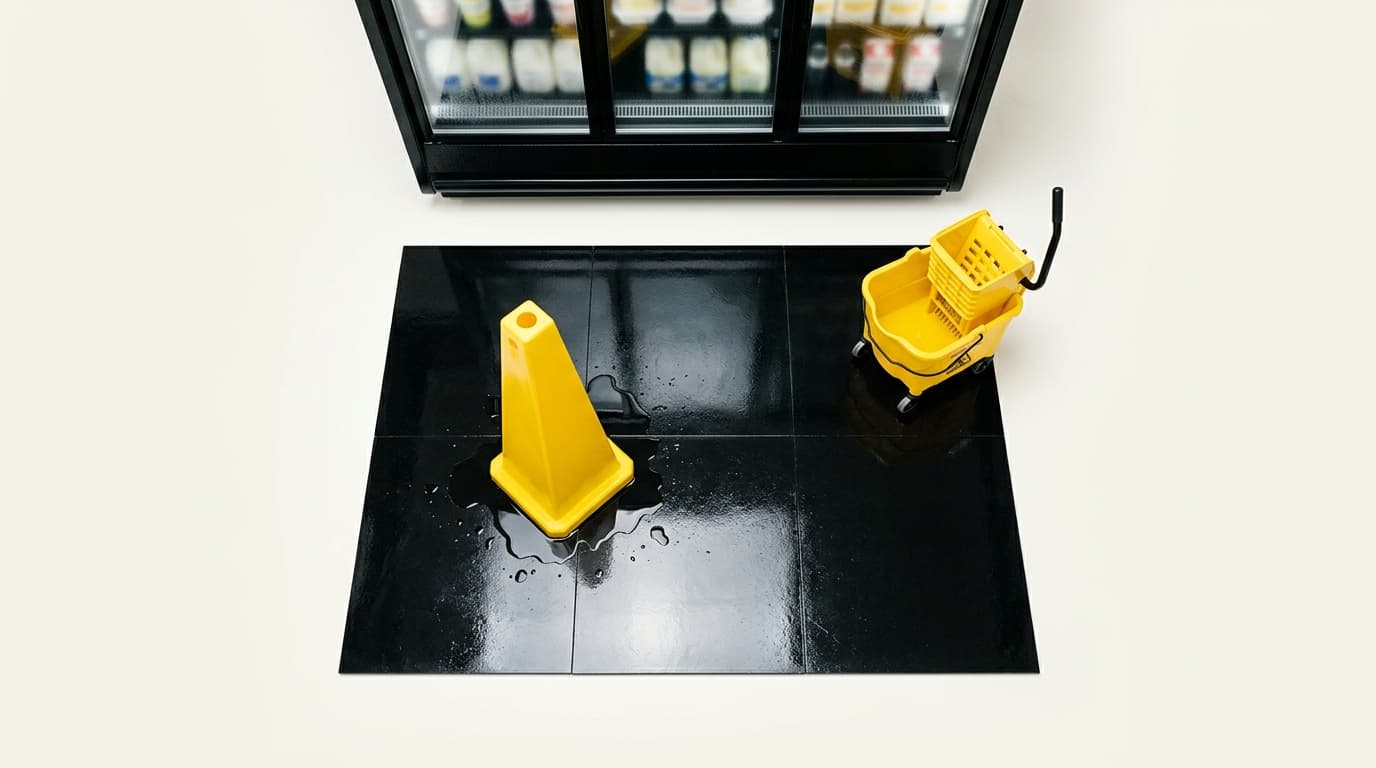
Slip-and-fall and trip-and-fall incidents account for a substantial share of business-related personal injury claims in both states. Wet floors without signage, cracked sidewalks outside commercial storefronts, uneven parking lot surfaces, and inadequate exterior lighting are recurring fact patterns. Pennsylvania courts have consistently held that a business cannot escape liability simply by arguing it lacked actual notice of a hazard if constructive notice can be established. Constructive notice means the condition existed long enough that a reasonable inspection would have discovered it.
Product liability claims against retailers and distributors present a separate but equally serious exposure. If a business sells or distributes a defective product, it can be held liable under strict liability theory in both Pennsylvania and New Jersey, even without proof of negligence. New Jersey's Products Liability Act (N.J.S.A. 2A:58C-1 et seq.) governs most product defect claims in that state and imposes liability on the entire distribution chain, including retail sellers.
Negligent security claims arise when a business fails to implement reasonable security measures and a patron or employee is injured by a third party on the premises. A bar that fails to employ trained security staff, a parking garage with non-functioning cameras, or a retail location in a high-crime area without adequate lighting can each face this theory of liability.
Insurance Coverage: What Most Businesses Get Wrong
A standard commercial general liability (CGL) policy covers bodily injury and property damage claims arising from business operations and premises. However, several coverage gaps frequently surprise business owners after an incident occurs.
- Liquor liability exclusions: Most CGL policies exclude claims arising from the sale or service of alcohol. Restaurants, bars, and event venues need a separate dram shop endorsement or standalone liquor liability policy. Pennsylvania's Dram Shop Act and New Jersey's Licensed Alcoholic Beverage Server Liability Act both impose direct liability on establishments that serve visibly intoxicated patrons who then cause harm.
- Employee versus contractor status: Injuries to workers classified as independent contractors typically fall outside workers' compensation coverage and can generate third-party personal injury claims against the business. Misclassification is a well-documented risk in both states.
- Aggregate limits exhaustion: CGL policies carry both per-occurrence and aggregate limits. A business that has already submitted multiple claims in a policy year may find its aggregate limit substantially eroded by the time a serious injury claim is filed.
- Umbrella policy gaps: An umbrella or excess policy does not always follow the form of the underlying CGL. Specific exclusions in the umbrella can leave a business exposed in the exact scenarios where primary coverage runs out.
When an insurer denies coverage, delays the defense, or attempts to settle without the business owner's meaningful participation, that conduct may constitute bad faith under Pennsylvania's Bad Faith Statute (42 Pa. C.S. § 8371) or New Jersey's common law bad faith standards. Both frameworks provide remedies beyond the policy limits, including attorney's fees and punitive damages in egregious cases.
Steps Businesses Should Take Immediately After an Incident
The actions taken in the first 24–72 hours after an injury on business premises directly affect litigation outcomes, often more than anything that happens later. A structured immediate response includes the following priorities.
- Secure and preserve surveillance footage. Most commercial security systems overwrite footage within 30–72 hours. Designate a responsible employee to download and store the relevant footage immediately. Failure to preserve it after receiving notice of a claim can result in a spoliation instruction at trial, which tells the jury it may assume the missing footage was unfavorable to the business.
- Complete a detailed incident report. Document the exact location, time, conditions, names of all witnesses, and any statements made at the scene. Keep this record separate from general business files and treat it as potentially privileged if prepared at the direction of legal counsel.
- Notify your insurance carrier promptly. Most CGL policies require prompt notice as a condition of coverage. Delayed notification can give an insurer grounds to deny the claim on procedural grounds entirely separate from the underlying merits.
- Preserve physical evidence. The flooring material, product involved, equipment, or any other physical element connected to the incident should be retained and not repaired or discarded until an attorney has assessed the claim.
- Consult a business litigation attorney before making statements. Communications made by business representatives before legal counsel is involved can be used as admissions. An attorney can help structure how the business communicates with the injured party, its insurer, and any government agencies that become involved.
Comparing Personal Injury Exposure: Pennsylvania vs. New Jersey Businesses
| Factor | Pennsylvania | New Jersey |
|---|---|---|
| Comparative fault bar | 51% or more bars recovery | 51% or more bars recovery |
| Statute of limitations (personal injury) | 2 years from date of injury | 2 years from date of injury |
| Product liability framework | Common law strict liability; Restatement (Second) Torts § 402A | Products Liability Act (N.J.S.A. 2A:58C-1); retailer liability included |
| Dram shop liability | Dram Shop Act; liability for serving visibly intoxicated adults | Licensed Alcoholic Beverage Server Liability Act; broader notice requirements |
| Bad faith insurance remedy | Statutory (42 Pa. C.S. § 8371); punitive damages available | Common law; Rova Farms standard; extra-contractual damages available |
| Premises liability duty to invitees | Highest duty; reasonable inspection and correction required | Highest duty; same standard; notice constructive or actual |
When a Business Becomes the Plaintiff
Businesses are not always defendants in personal injury litigation. A subcontractor injured on a client's worksite, a business owner hurt at a vendor's facility, or a commercial tenant injured due to a landlord's negligence in maintaining common areas each present scenarios where the business entity itself has a claim to pursue. Pennsylvania and New Jersey both recognize the right of a business to bring a personal injury action for losses that include lost profits, loss of a key employee's services, and property damage connected to the incident. These claims often require forensic accounting support to document economic losses with the specificity courts require.
Personal Injury Claims for PA and NJ Businesses FAQ
Does a business automatically lose a personal injury claim if someone is injured on its property?
No. A business is not automatically liable simply because an injury occurred on its premises. The injured party must prove that the business breached its duty of care, that the breach caused the injury, and that actual damages resulted. Businesses that conducted regular inspections, promptly addressed known hazards, and posted appropriate warnings have a strong factual foundation to contest liability or reduce comparative fault allocation significantly.
What is the statute of limitations for a personal injury claim against a business in Pennsylvania and New Jersey?
Both Pennsylvania and New Jersey impose a 2-year statute of limitations for most personal injury claims, running from the date of the injury. Limited exceptions apply, including the discovery rule for injuries whose cause was not immediately apparent, and tolling provisions for minors. A business that receives notice of a potential claim should preserve all evidence immediately, regardless of where it believes the plaintiff stands within the limitations period.
Can a business be held liable for injuries caused by a third party on its property?
Yes, under a negligent security theory. If a business knew or should have known that criminal activity or third-party violence was a foreseeable risk at its location and failed to implement reasonable security measures, courts in both Pennsylvania and New Jersey have imposed liability. The foreseeability of harm is determined by factors including the history of incidents at or near the location, the nature of the business, and whether the business took any prior steps to address security concerns.
What happens if the business's insurance company refuses to defend or denies the claim?
A wrongful denial of coverage or refusal to defend can constitute bad faith under Pennsylvania's Bad Faith Statute or under New Jersey common law. Remedies include recovery of the full policy benefits, attorney's fees, interest, and punitive damages. A business facing a coverage denial should engage an attorney with insurance litigation experience promptly, because the same 2-year limitations period that governs the underlying tort claim can also affect the timing of a bad faith action in Pennsylvania.
Should a business settle a personal injury claim quickly or litigate?
The answer depends on the strength of the liability evidence, the severity of the injury, coverage availability, and the business's litigation tolerance. Early settlement eliminates uncertainty and reduces legal costs, but premature settlement without full investigation can result in paying far more than the claim is worth or admitting liability in ways that affect related claims. A thorough pre-suit investigation, including a review of incident reports, surveillance footage, medical records, and expert opinions on causation, provides the factual baseline needed to make that decision with confidence rather than pressure.
Disclaimer: For informational purposes only; does not constitute legal advice. Always consult a licensed attorney regarding specific claims.
