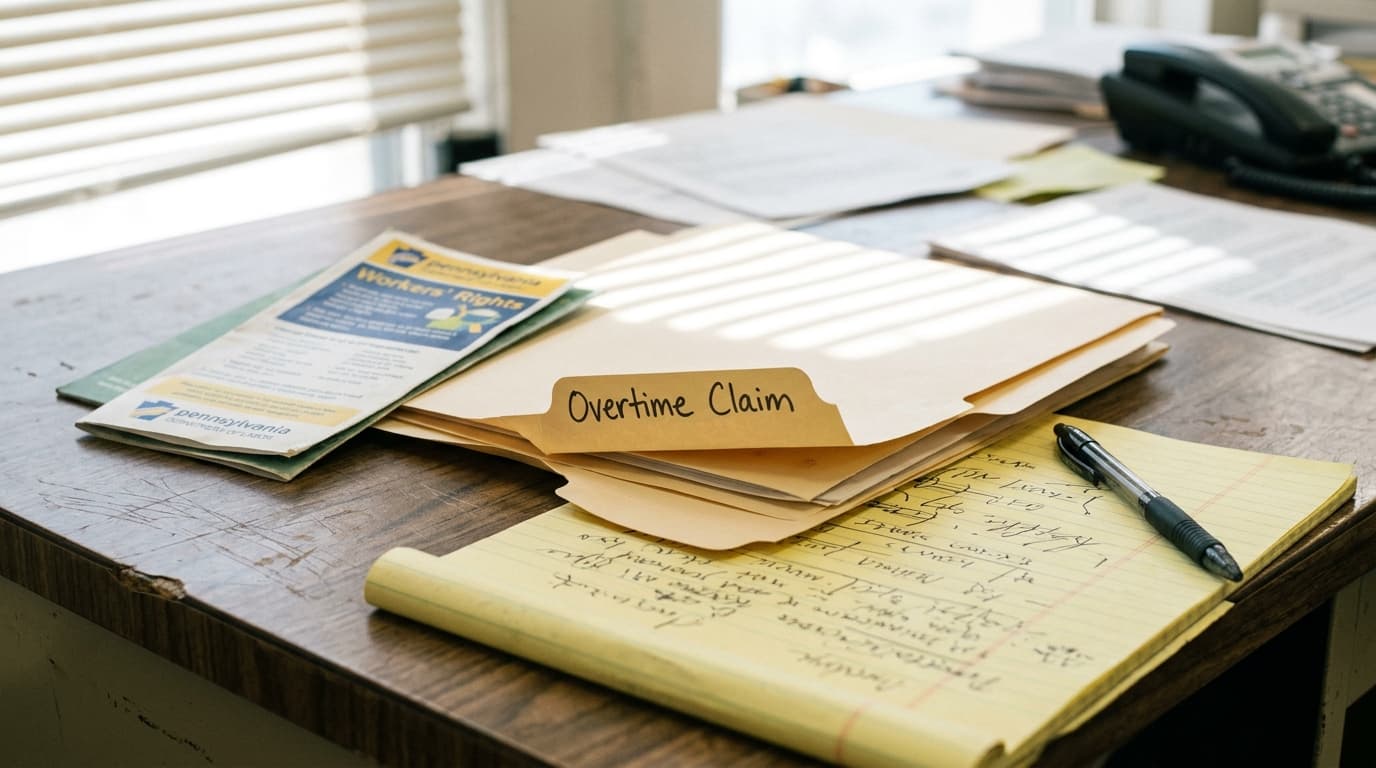
Unpaid Overtime in Pennsylvania: You Need a Wage and Hour Lawyer in Philadelphia.
Pennsylvania workers who do not receive overtime pay have strong legal rights. State and federal laws both protect your right to fair wages. If you work more than 40 hours in a week, you deserve time-and-a-half pay. If your boss refuses to pay, you can sue to get your missing money.
You can also win extra cash penalties and legal fee coverage. New Jersey workers have similar strong protections.
This guide explains overtime laws in Pennsylvania and New Jersey. It also covers job misclassification and your rights during medical leave.
How the Pennsylvania Minimum Wage Act Governs Overtime
Pennsylvania law requires employers to pay 1.5 times your regular rate for all overtime. These rules apply to any work past 40 hours in a single workweek.
State rules often provide stronger coverage for workers than federal law. The state labor department works with federal officials to enforce these standards.
Under current rules, the salary cutoff for overtime exemptions is $684 per week ($35,568 per year). Workers earning less than this amount must receive overtime pay, no matter their title.
A title like "manager" does not automatically stop you from getting overtime. The law looks at your actual daily duties, not what your boss calls you. Employers who misclassify workers sometimes engage in broader workplace discrimination, and Philadelphia workers have legal remedies for both. Often denied overtime in Pennsylvania include:
Shift leaders in retail and food service who lack true manager power
Home health aides and direct care staff
Construction and delivery workers paid flat day rates
Inside sales reps incorrectly labeled as outside sales
IT and tech staff mislabeled as office workers
Unpaid Overtime in New Jersey: Key Differences
New Jersey wage rules give workers powerful tools to recover unpaid wages. Under New Jersey law, workers can win up to 200% in added penalty damages. This penalty is higher than standard federal rules allow.
New Jersey gives workers up to six years to file a wage claim. In contrast, federal law only gives you two or three years.
This six-year window helps if your employer underpaid you for several years. An attorney can help you pick the state laws that get you the largest payout.
Employee Misclassification: Why Overtime Goes Unpaid
Misclassification is the main reason workers do not get their overtime pay. Many employers label staff as independent contractors or salaried managers to avoid paying overtime.
Courts look past job labels to check the true reality of your work setup.
| Factor | Regular Employee (Gets Overtime) | Independent Contractor (No Overtime) |
|---|---|---|
| Job Control | The boss sets your hours and directs your work | You choose how and when to do the work |
| Tools & Gear | The company supplies your workspace and tools | You buy and use your own equipment |
| Profit & Loss | Fixed hourly or weekly pay with no risk | You can gain or lose money on the job |
| Work Duration | Ongoing, long-term employment | Short-term contract for a single project |
| Core Business | Your work is central to company operations | Your work is extra, outside support |
Pennsylvania courts use these factors to judge your true job status. If your boss sets your hours and gives you tools, you are likely an employee. You deserve overtime pay even if you signed a 1099 form.
Gig Workers and Misclassification
App-based delivery and rideshare drivers in the Philadelphia area face frequent misclassification. Many delivery companies try to treat drivers as independent contractors to save money.
Recent court rulings show that many app workers are legal employees. If one app sets your pay, assigns clients, and can ban you, you may have a valid claim.
FMLA Rights: Protecting Your Job During Medical Leave
The Family and Medical Leave Act (FMLA) gives workers 12 weeks of unpaid leave per year. You can take this leave for serious health issues or to care for family.
To qualify, your employer must have at least 50 workers within 75 miles. You must also have worked 1,250 hours over the past 12 months.
Common FMLA violations include:
Firing a worker shortly after they request or take medical leave
Denying leave by claiming a serious medical condition does not qualify
Punishing workers who take leave by cutting their hours or changing schedules
Failing to notify workers of their FMLA rights when they ask for time off
Refusing to give an employee their original job back after their return
Pennsylvania does not offer state-funded paid medical leave. However, New Jersey pays workers up to 85% of their weekly wages during leave for up to 12 weeks.
What to Do If Your Employer Denied Pay or Punished You
You must act quickly because strict legal deadlines apply to all wage claims. You have two to three years under federal rules and three years under Pennsylvania law.
Steps to take right now:
Save all pay stubs, bank deposits, and tax forms like W-2s or 1099s.
Keep all emails and text messages about your pay, duties, or time off.
Write down all the hours you worked, including tasks done off the clock.
Never sign a severance deal before you talk with an attorney.
Speak with an employment lawyer to review your case for free.
Workers can also team up in group lawsuits against the same employer. These group claims are common against restaurants, health clinics, and delivery companies across local counties.
Unpaid Overtime and Wage Theft FAQ
How do I know if my boss misclassified me as a contractor?
Courts look at who controls your schedule, who buys your gear, and how you get paid. If your employer sets your daily hours and provides your tools, you are likely an employee.
What damages can I win in a New Jersey overtime lawsuit?
You can get 100% of your unpaid wages plus up to 200% in extra cash penalties. The court can also make your employer pay all your legal fees.
Can my boss fire me for asking about my overtime pay?
No, firing you for asking about overtime pay is illegal retaliation. If your employer punishes or fires you, you can sue for extra money and get your job back.
What counts as a serious health condition under the FMLA?
A serious condition includes any illness or injury requiring a hospital stay or ongoing doctor care. This includes diabetes, cancer, severe anxiety, and surgery recovery.
How much time do I have to file a wage claim in Pennsylvania?
You have up to three years to file a wage claim under Pennsylvania law. Federal claims allow two years, or three years if your boss broke the law on purpose.
Have you been denied your fair pay in Pennsylvania or New Jersey? The team at Freundlich & Littman, LLC, is ready to help.
We fight to get you every dollar you deserve. Call us at (215) 545-8500 or fill out our online form today for a free case review.
General information, not legal advice.*
Disclaimer: For informational purposes only; does not constitute legal advice. Always consult a licensed attorney regarding specific claims.
