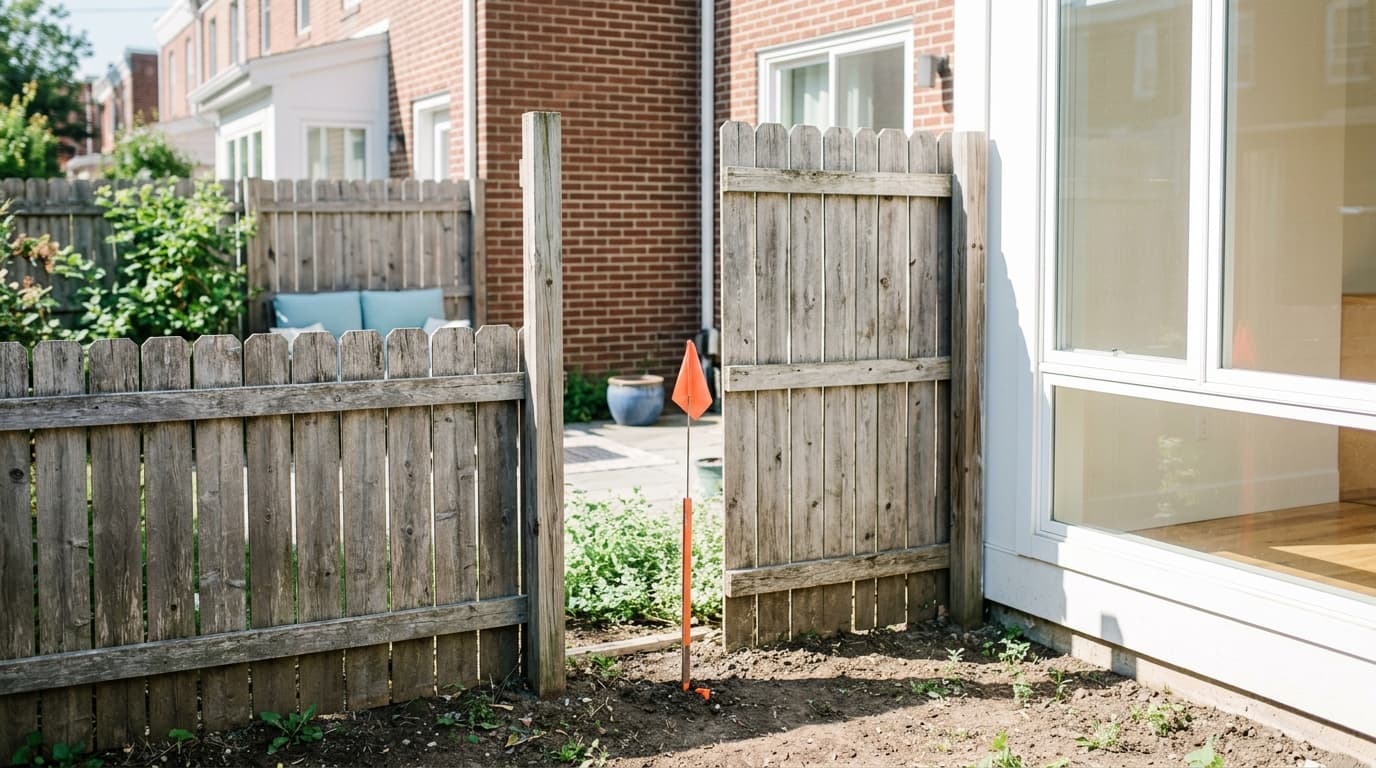
Property line disputes in Philadelphia and its surrounding counties give rise to concrete legal claims under Pennsylvania law, including private nuisance, trespass, and equitable relief for encroachments. Whether a neighbor's fence sits 18 inches onto your land, a tree root has buckled your foundation, or surface water from an adjacent lot floods your basement every time it rains, Pennsylvania courts recognize actionable claims in each scenario. Understanding which legal theory applies, and what evidence you need, determines whether you recover damages or simply absorb the loss.
Physical Encroachments: When a Fence, Wall, or Structure Crosses the Line
A physical encroachment occurs when a structure built on one parcel extends over the boundary onto an adjoining parcel. In Pennsylvania, this triggers a trespass claim the moment the encroachment exists, regardless of whether the neighbor intended the intrusion. Intent is irrelevant to liability; what matters is the physical fact of the crossing.
The remedies available depend on how long the encroachment has existed and whether the encroaching party has used the strip of land openly, continuously, and exclusively for 21 years. Under Pennsylvania's adverse possession statute (42 Pa. C.S. § 5530), a neighbor who satisfies all elements for 21 years can claim legal title to the encroached strip. This is why acting promptly matters: a fence built in 2005 that has stood unchallenged could become a quiet title action by 2026.
If adverse possession is not yet an issue, courts in Bucks County, Montgomery County, and Philadelphia have three principal remedies available to them:
- Mandatory injunction: A court order requiring removal of the encroaching structure. Courts weigh the cost of removal against the harm to the property owner and the encroaching neighbor's good faith, but Pennsylvania courts do order removal even where it is expensive.
- Compensatory damages: Monetary compensation for loss of use and diminution in property value caused by the encroachment during the period it existed.
- License or easement by negotiation: In some cases, the parties agree that the encroaching neighbor pays fair market value for a formal easement or license, allowing the structure to remain legally.
Before filing suit, obtain a current boundary survey from a Pennsylvania-licensed surveyor. Courts treat survey evidence as foundational; without it, your claim rests on opinion rather than measurement. The survey cost, typically $800–$2,500 for a residential lot in the Philadelphia metro area, is recoverable as consequential damages if you prevail.
Tree Limbs, Roots, and the Pennsylvania Rule on Encroaching Vegetation
Pennsylvania follows the "Hawaii Rule" (adopted by the Restatement Third of Torts) for tree encroachment disputes, moving away from the older common-law approach that left affected neighbors to their own self-help remedy of trimming at the property line. Under the modern standard applied in Pennsylvania, a landowner whose tree causes or poses imminent risk of harm to a neighboring property can face liability in nuisance or negligence if the landowner knew or reasonably should have known of the danger and failed to act.
The practical consequence: if you notify your neighbor in writing that their oak's overhanging limb is cracked and overhangs your roof, and a storm causes that limb to collapse and damage your structure, that written notice dramatically strengthens a negligence claim. Without notice, the neighbor may argue they had no actual or constructive knowledge of the hazard. Send the notice by certified mail and retain the return receipt.
For root encroachment specifically, courts look at whether the roots have caused concrete physical damage (cracked foundation, buckled pavement, severed utility lines) rather than mere aesthetic intrusion. Documented repair estimates from licensed contractors, paired with a root mapping analysis from an arborist, provide the evidentiary foundation that courts require to quantify damages.
Self-help trimming to the property line remains legally permitted in Pennsylvania, but you bear liability if your trimming damages the tree to the point of killing it. A tree with a replacement value of $10,000–$50,000 on a suburban lot is not a risk worth taking without legal advice first.
Neighbor Water Damage and PA Law: Surface Water and Drainage Disputes
Neighbor water damage under PA law is governed by the "reasonable use" doctrine. Pennsylvania abandoned the older "common enemy" doctrine (under which each landowner could repel surface water however they chose) in favor of a rule that treats unreasonable interference with natural water flow as actionable. The leading Pennsylvania case, Armstrong v. Francis Corp. (1956), established that a landowner who alters drainage in a way that substantially increases the burden of surface water on an adjacent lower parcel acts unreasonably and is liable for resulting damage.
In practical terms, this means that if your neighbor regraded their yard, installed a hardscape patio, or directed downspouts so that water now channels onto your property and into your basement or foundation, you have a viable claim. The elements you must establish are:
- Your neighbor made an artificial change to the natural drainage pattern on their land.
- That change increased the volume or velocity of surface water reaching your property beyond what naturally would have occurred.
- You suffered quantifiable damage as a direct result.
Evidence that wins these cases includes before-and-after grading surveys, time-stamped photographs of flooding events, hydrological expert reports, repair invoices for water damage, and records showing when the neighbor's alterations were made (building permits, contractor invoices, Google Earth historical imagery). Philadelphia and Bucks County courts have awarded damages covering foundation waterproofing, mold remediation, interior repairs, and loss of use of affected basement space.
If your insurance company denied a water damage claim because they characterize the flooding as a "surface water exclusion" event, that denial may itself be challengeable. An attorney who handles both neighbor water damage under PA law and bad faith insurance claims can evaluate whether the insurer's investigation was adequate and whether a separate bad faith action is warranted.
Private Nuisance Claims in Pennsylvania: Beyond Physical Intrusions
A private nuisance claim in Pennsylvania does not require a physical object to cross your property line. The Restatement Second of Torts § 821D, which Pennsylvania courts apply, defines private nuisance as a nontrespassory invasion of another's interest in the private use and enjoyment of land. This covers noise, vibrations, odors, light pollution, and similar conditions that substantially and unreasonably interfere with a neighbor's use of their property.
The threshold question is whether the interference is both substantial and unreasonable. Pennsylvania courts apply a balancing test:
| Factor | What Courts Examine | Evidence That Helps Your Claim |
|---|---|---|
| Severity of harm | Would a person of ordinary sensibility find the condition objectionable? | Decibel readings, air quality measurements, medical records |
| Duration and frequency | Is the condition constant, recurring, or isolated? | Dated logs, noise complaint records, municipal violation notices |
| Character of the neighborhood | Is the use consistent with the zoning and character of the area? | Zoning records, comparable property uses, neighborhood history |
| Social utility of defendant's conduct | Does the neighbor's activity serve a legitimate purpose? | Permits, licenses, commercial versus residential use |
| Burden of abatement | How costly is it for the neighbor to stop or reduce the interference? | Engineering estimates, operational alternatives |
Remedies for a successful private nuisance claim include injunctive relief (a court order to stop or reduce the offending conduct), compensatory damages for past harm, and in cases of particularly willful conduct, punitive damages. Courts in Delaware County and Chester County have granted injunctions against neighbors running commercial operations, keeping livestock in residential zones, and operating generators continuously overnight.
When to Involve a Property Line Dispute Lawyer in Bucks County or Philadelphia
You need legal counsel before the situation escalates to litigation or before the statute of limitations runs. Pennsylvania's general negligence and trespass statute of limitations is two years (42 Pa. C.S. § 5524). For nuisance claims with continuing conduct, the clock can reset with each new occurrence, but gathering evidence contemporaneously remains essential. A property line dispute lawyer in Bucks County or the Philadelphia metro can send a formal demand letter that triggers the neighbor's insurance coverage, negotiate a recorded easement or boundary line agreement, or file for a preliminary injunction in cases of imminent harm. Early intervention almost always costs less than trial.
Property Line and Neighbor Dispute FAQ
What is the statute of limitations for a property encroachment claim in Pennsylvania?
Two years for trespass and negligence claims under 42 Pa. C.S. § 5524. For adverse possession, a neighbor must maintain open, continuous, exclusive, and hostile possession for 21 years before claiming title. Act before either window closes.
Can I sue my neighbor for water draining onto my property in Pennsylvania?
Yes. Under Pennsylvania's reasonable use doctrine, a neighbor who artificially alters drainage so that surface water substantially increases the burden on your land is liable for resulting damage. Document the alteration, the flooding events, and repair costs before filing.
What qualifies as a private nuisance claim in Pennsylvania?
Any nontrespassory condition (noise, odor, vibration, excessive light) that substantially and unreasonably interferes with your use and enjoyment of your property qualifies. Courts apply a balancing test weighing the severity and duration of harm against the social utility of the neighbor's conduct.
Does my neighbor have to pay to remove a fence that encroaches on my property in Philadelphia?
Yes, if a court issues a mandatory injunction. Pennsylvania courts can order removal of encroaching structures even when removal is costly, though judges weigh the equities. Getting a licensed survey and filing promptly strengthens your position significantly.
What should I do if a neighbor's tree damages my roof or foundation?
Send written notice to the neighbor by certified mail identifying the specific hazard. Document the damage with photographs and get contractor repair estimates. Consult an attorney before trimming roots yourself, since killing a neighbor's tree through root cutting can expose you to counterclaims valued at the tree's full replacement cost.
Disclaimer: For informational purposes only; does not constitute legal advice. Always consult a licensed attorney regarding specific claims.
